Every region wakes up differently
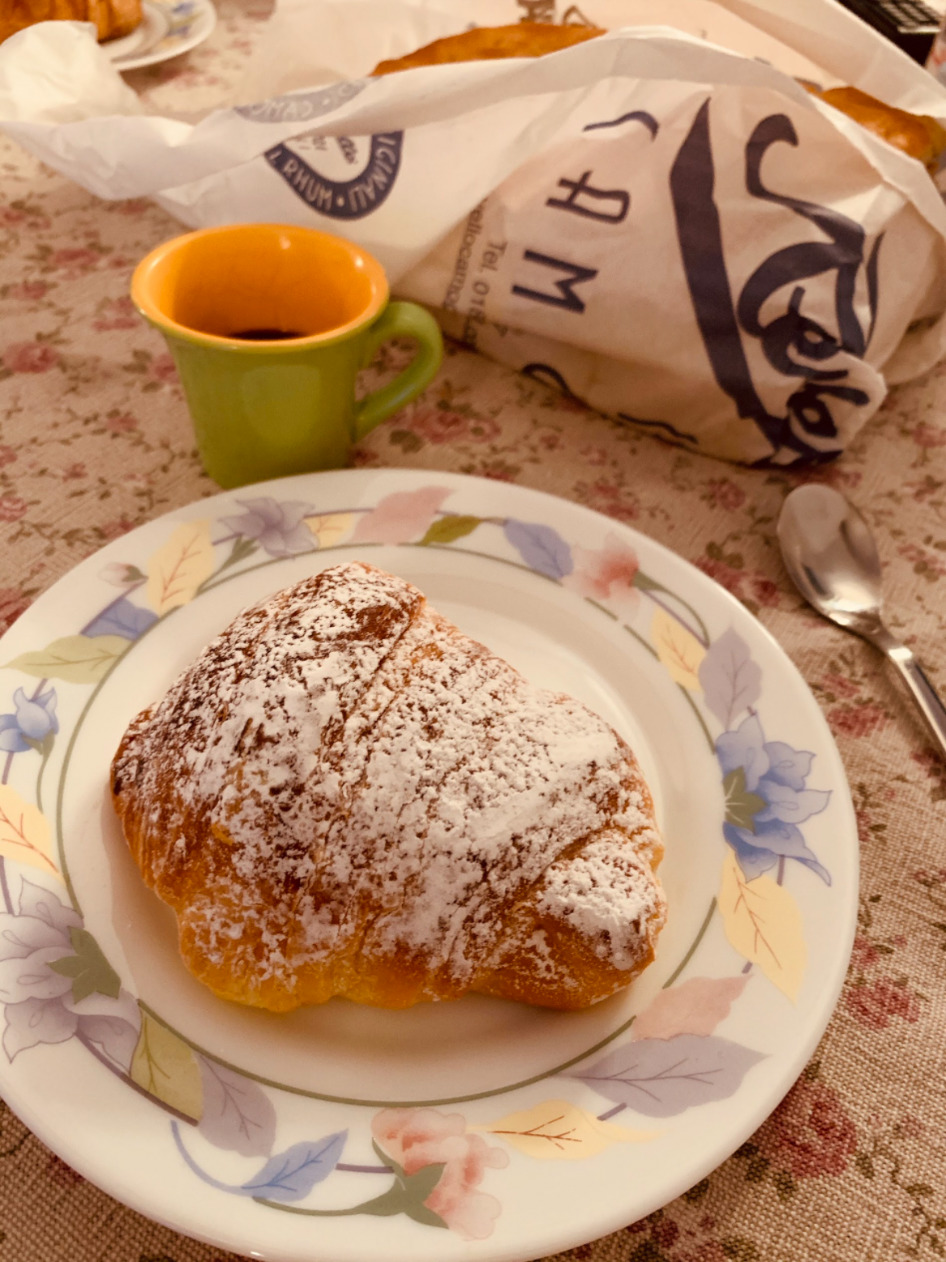
For many visitors, breakfast is expected to be a complete meal. In Italy, the everyday version can be strikingly compact: coffee and something sweet, enjoyed at home or during a brief stop at the bar. Yet calling it simply ‘coffee and a cornetto’ misses the most interesting part. Every region—and often every city—has its own habits, names and combinations.
The pleasure is in noticing the local variation. The morning ritual changes as you travel: chocolate and coffee in Piedmont, warm focaccia in Liguria, filled pastry in Salento, an intensely short espresso in Naples, or something cool and sweet beneath the Sicilian sun.
In Turin, ask for a marocchino
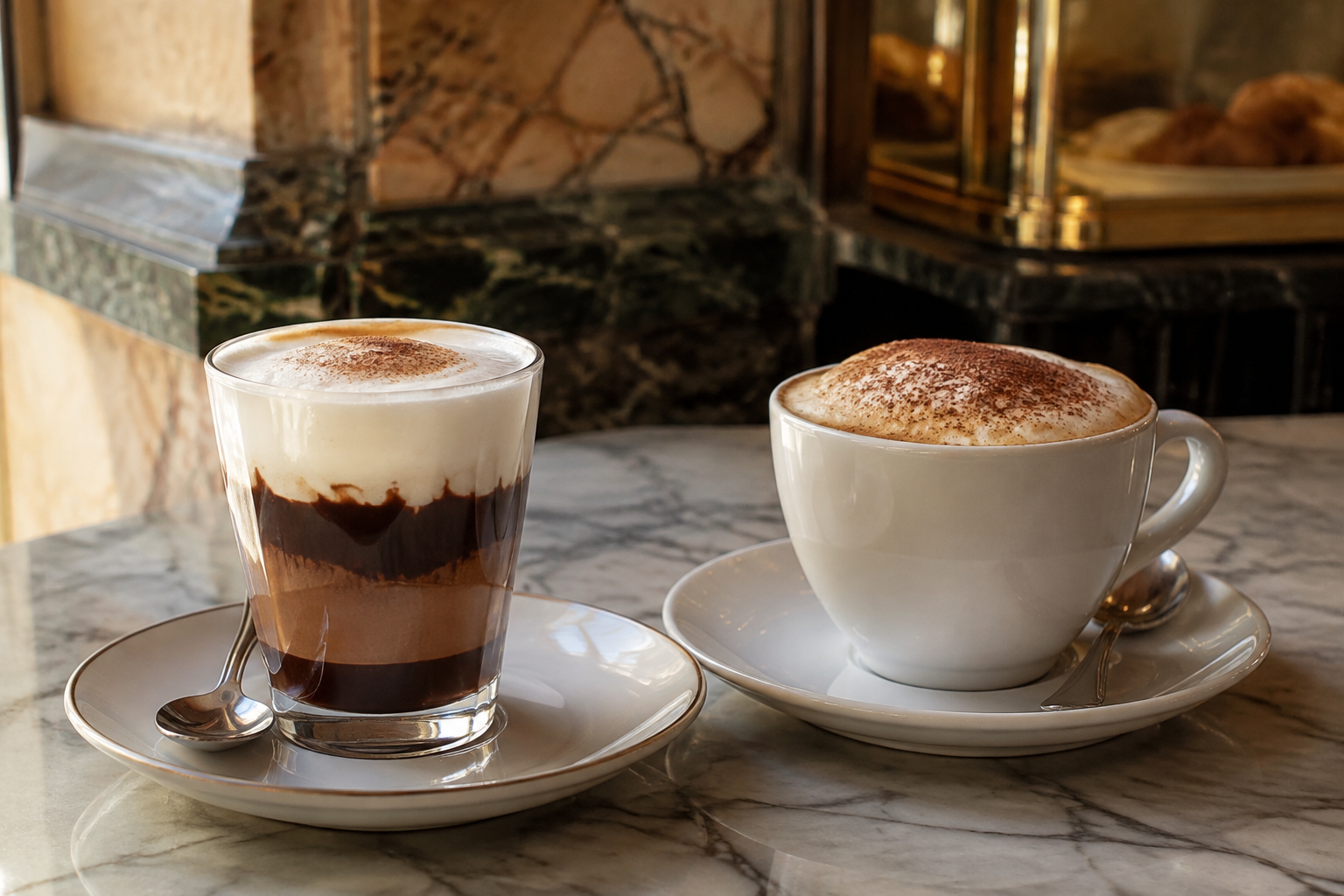
In Turin and across Piedmont, a marocchino is a small but indulgent alternative to an ordinary espresso. In the version we know locally, the inside of a small glass is lined with chocolate, then filled with coffee and marked with hot milk and foam. Recipes vary from bar to bar, which is part of the pleasure of ordering it.
Some cafés also offer cocoa or cinnamon to dust over cappuccino foam. It is a tiny detail, but one that turns the morning coffee into something personal: more cocoa, a trace of cinnamon, or nothing at all.
Liguria and Puglia: two pastries, two landscapes
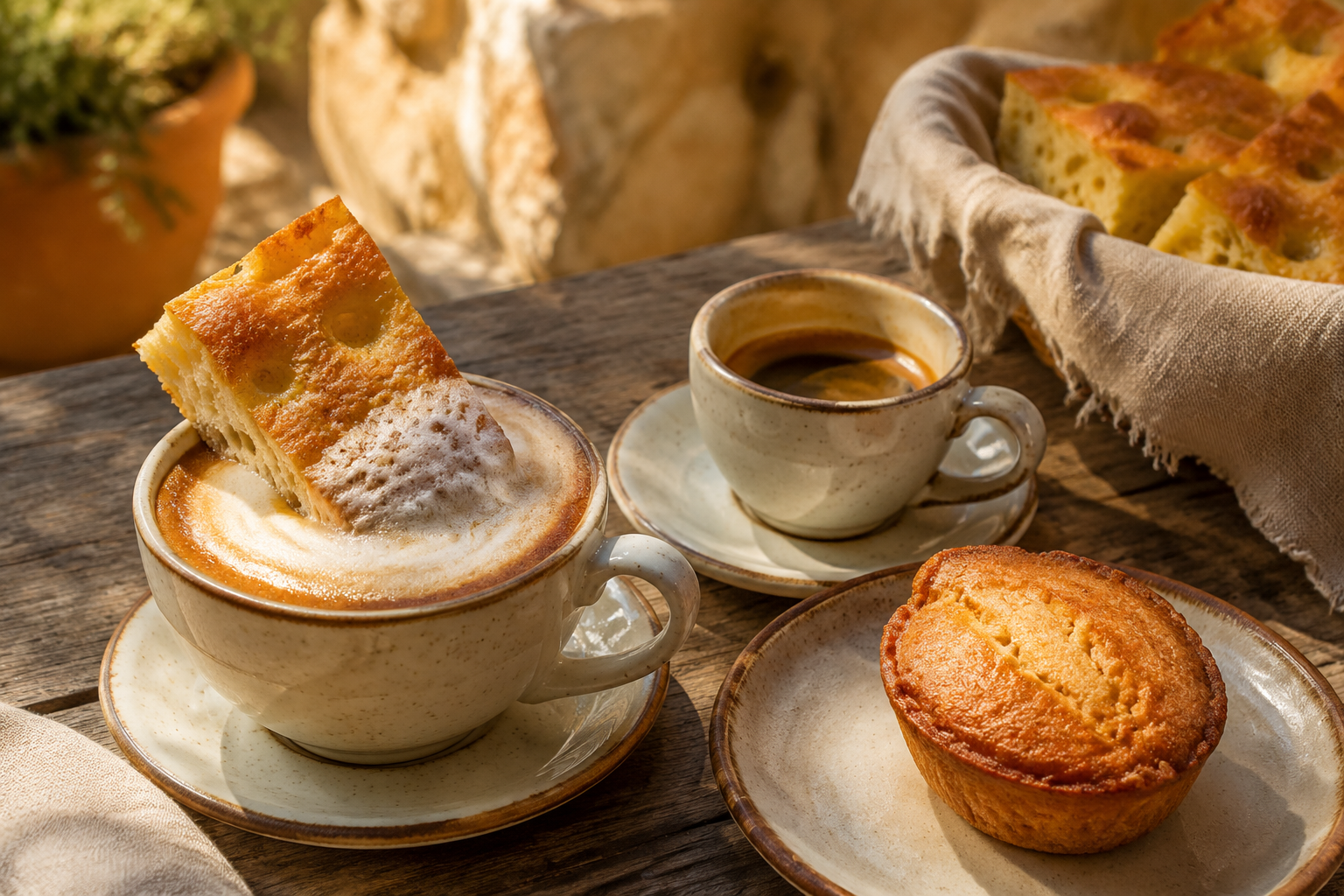
In Liguria, breakfast can be delightfully savoury. A strip of golden focaccia may be pinched between the fingers and dipped—yes, dipped—into cappuccino. To an outsider it may sound improbable; in Genoa it belongs naturally to the rhythm of the morning.
In Puglia, and especially around Lecce, coffee is often accompanied by a pasticciotto: a small oval pastry with a tender shortcrust shell and a rich custard centre. Served warm when possible, it turns a quick coffee into a distinctly Salentine breakfast.
From Naples to Sicily, intensity changes form
In Campania, and especially in Naples, coffee is a ritual in its own right. It can arrive so short and concentrated that there seems to be only one decisive sip in the cup. A tiny glass of water often accompanies it—what some people informally call a ‘shottino’, a small shot of sparkling or still water. At certain bars you may also hear sparkling water described as ‘mossa’ and still water as ‘liscia’. Local custom is to drink the water first, clearing the palate before the coffee.
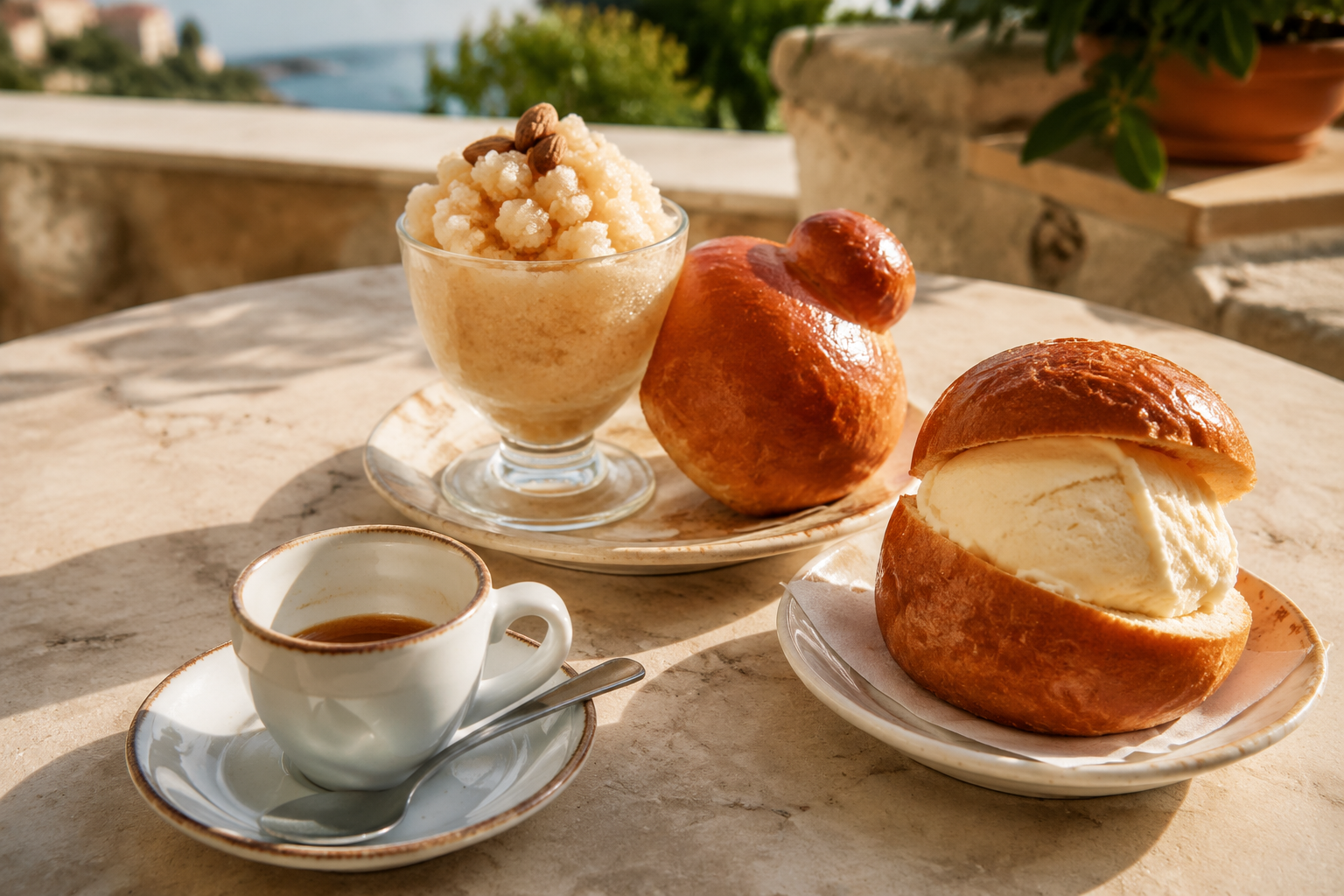
In Sicily, breakfast may be cold even on a warm morning: a creamy granita with a soft brioche col tuppo is a classic pairing. Flavours change with place and season—almond, lemon, coffee, mulberry and more. In some cafés and during the warmer months, a brioche filled with gelato offers an equally joyful start to the day.
Cappuccino has its own hour
Visitors are sometimes told that cappuccino is forbidden after a certain time. It is not a rule or a law. It is simply associated so strongly with breakfast that ordering one after lunch can feel unusual to many Italians.
If you enjoy it, order it. Understanding the custom should make daily life in Italy easier and more amusing, not turn an ordinary pleasure into a test of belonging. The best approach is to notice the local rhythm, then taste your way through it.
Sources and editorial note
The article is written in original language for My Private Property Care. Sources support the factual context; no source text has been reproduced.
- Italia.it — customary Italian breakfast hours ↗
- Italia.it — a journey through regional Italian breakfasts ↗
- La Mia Liguria — focaccia with cappuccino or coffee ↗
- Visit Naples — the Neapolitan coffee ritual ↗
- Original photograph, renderings and local observationThe opening photograph belongs to My Private Property Care. The three supporting images are newly generated original editorial renderings and do not reproduce third-party photographs. Details of the Turin marocchino and the regional observations are written from local experience; individual recipes and customs vary.